


The Invisible Competition


THE ADVISOR'S AI TOOLKIT : Making Fintech Knowledge Accessible to Every Advisor
Imagine discovering something that changes your practice forever. What if a new client mentioned: "ChatGPT recommended you when I asked about retirement planning in ." Never heard of ChatGPT recommending anyone? It's happening.
These sort of events got us thinking and what we discovered will fundamentally change how you think about client acquisition for the next decade.
The reality is stark - many your prospects are now asking AI platforms for financial advice before they ever search Google or ask for referrals. These aren't just casual inquiries - they're asking detailed questions about retirement planning, investment strategies, and yes, which financial advisors they should trust with their life savings.
This isn't some distant future trend. It's happening right now, and the advisors who understand it are gaining an almost unfair advantage.
The window for early-mover advantage is closing fast. This newsletter contains everything our research uncovered about how AI platforms choose which advisors to recommend, the specific strategies that are working, and most importantly, how you can implement this starting today.
Amal Antony, TOOLKIT CRM
In this post:
- How AI Platforms Generate Leads for Advisors
- The "AI Visibility Gap"
- How to get the Competitive Advantage in Your City
- Your 8-Week Implementation Blueprint
- Community Resources
THE INVISIBLE COMPETITION
While researching this article, we tested dozens of location-specific queries across major AI platforms. The results were eye-opening. In every major city, the same 3-5 advisors consistently appeared in AI recommendations, while hundreds of equally qualified advisors were completely invisible.
What separated the winners from the invisible? It wasn't credentials, experience, or even client satisfaction. The advisors being recommended shared five specific characteristics that we'll detail throughout this article, but here's the preview:
- They all had optimized their digital presence for conversational queries
- They maintained comprehensive online profiles
- They created content that directly answered the questions prospects ask AI platforms
A comprehensive FAQ section on your website that directly addresses user questions (Examples: "How do stock options factor into retirement planning?" and "What's the best way to handle RSUs for tax efficiency?") gives you quality points. ChatGPT loves this Q&A format and can cite your answers.
What Makes ChatGPT Choose You?
Why Google SEO Isn't Enough for Financial Advisors

ChatGPT doesn't use Google for its recommendations. It uses Bing. This means all your Google SEO optimization, while still valuable, isn't directly helping your AI visibility.
While most advisors focus exclusively on Google optimization, smart money is also optimizing for Bing. This includes claiming and optimizing your Bing Places profile, ensuring your website performs well in Bing search results
The Content That AI Platforms Crave
Our analysis of successful AI recommendations revealed a clear pattern in the type of content that gets cited. AI platforms strongly favor content that directly answers questions in a conversational tone.
Traditional marketing copy that talks about your firm's values and approach rarely gets mentioned. But content that says "Q: How much should I save for retirement? A: Financial planners typically recommend saving 10-15% of your income" gets cited frequently.
The Trust Signals That Matter Most
AI platforms are essentially trust engines. They're trying to recommend advisors who are credible, qualified, and trustworthy. But they determine trust differently than humans do. While a human might be impressed by your office location or personal rapport, AI platforms look for specific digital trust signals.
The most powerful trust signals we identified include CFP or CFA designations prominently displayed, fiduciary status clearly stated, years of experience quantified, client testimonials with specific outcomes, media mentions or awards, professional association memberships, and educational content that demonstrates expertise.
Machine Readability
Here's the crucial part: the trust signals need to be machine-readable.
Having a CFP designation buried in your bio paragraph won't help. But having it in your website's structured data, your directory listings, and your content headers will significantly boost your AI visibility.

Reverse Engineer Success In 90 Days
Our research suggests a methodical approach that you can use to reverse engineer visibility on these platforms. The strategy begins with competitive intelligence: systematically testing AI platforms with the questions your ideal clients are likely to ask.
Start by querying ChatGPT, Claude, and Google's Gemini with dozens of questions that prospects in your market might ask:
- "Who are the best fee-only advisors in {your city}?"
- "How do I find a fiduciary financial planner?"
- "What should I look for in a retirement planning advisor?"
Document every response and analyze which advisors are being recommended and why.
The next phase involves reverse-engineering success. Create content that directly addresses these queries, optimize your Google Business and Bing Places profiles, and implement structured data markup that makes your credentials and services machine-readable.
Following this methodology should typically put your content in the AI's answer pool within 30 days, with consistent AI recommendations appearing by day 60 (Assuming that the content you've written is high quality), and measurable lead generation by day 90.
Advisors who optimize for AI recommendations should see an increase in qualified leads, with conversion rates higher than in traditional marketing channels.
Content Strategy for Financial Advisors:
Local Authority Strategy
AI platforms heavily weight local relevance when making recommendations. This creates a massive opportunity for advisors who position themselves as local authorities rather than generic financial planners.
Create content that specifically addresses financial planning challenges in your area. "Estate Planning Considerations for California Residents," "Retirement Planning with Texas State Benefits," or "Investment Strategies for Vancouver's High Cost of Living" all signal local expertise to AI platforms.
But don't just mention your location - provide genuine local value. Discuss local tax implications, regional economic factors, or area-specific financial challenges. This type of content gets cited frequently because it provides information prospects can't get from generic financial planning articles.
Educational Content
While FAQ content gets you discovered, educational content builds your authority and keeps you top-of-mind with AI platforms. Create comprehensive guides on topics your ideal clients care about: "The Complete Guide to 401(k) Rollovers," "Understanding Social Security Optimization," or "Investment Strategies for High-Income Professionals."
The key is depth and specificity. A 500-word blog post about retirement planning won't impress AI platforms. But a 3,000-word comprehensive guide that covers every aspect of retirement planning for your target demographic is more probable to get cited repeatedly.
AI platforms are constantly evaluating trustworthiness, so your content needs to demonstrate expertise, authority, and credibility. Include your credentials in your content naturally: "As a CFP professional with 15 years of experience..." Reference reputable sources and studies. Share specific (anonymized) client examples that demonstrate your expertise.

Tracking Your AI Visibility
Most advisors are flying blind when it comes to AI visibility. They have no idea whether AI platforms are recommending them, how they're being described, or what they can do to improve their standing. This is like running a Google Ads campaign without ever checking your click-through rates.
Track the business impact of your AI optimization efforts. In Google Analytics set up custom segments to identify traffic from AI platforms. Look for referrals from chat.openai.com, bard.google.com, and claude.ai. Also add "AI platform" as an option in your "How did you hear about us?" forms.
Advisors who implement systematic AI monitoring identify optimization opportunities 85% faster than those who rely on sporadic manual checks
Specialized Tools:
SEMrush AI Toolkit
Best For: Advisors serious about AI optimization, SEMrush's AI Toolkit provides comprehensive visibility tracking across ChatGPT, Google's Gemini, and Perplexity. At $99 per month, it's not cheap, but the insights it provides can be game-changing.
Key Differentiator: The toolkit shows you exactly how often your brand appears in AI responses, what context you're mentioned in, and how your visibility compares to competitors. More importantly, it tracks sentiment - whether AI platforms are describing you positively, neutrally, or negatively.
SpyFu (Free Access)
Best For: Advisors who need a high-level check. Rather than granular insights, SpyFu offers free access to their database of 250+ million ChatGPT conversations. You can search for your firm name and see if you've been mentioned in any recorded conversations.
Key Differentiator: Budget Friendly
The Technical Foundation
While great content is essential, the technical foundation of your online presence determines whether AI platforms can find and understand your information. This is where many advisors lose the game before they even start playing.
ChatGPT relies heavily on Bing Places for local recommendations. Ensure your Bing Places profile is not incomplete or outdated - But it goes beyond the major directories. Our research found that ChatGPT frequently cites lesser-known directories like ThreeBestRated and Expertise.com. These platforms are more accessible to AI crawlers than heavily protected sites like Yelp or Facebook.
Create a comprehensive directory strategy that includes:
- Google Business Profile (complete with photos, hours, services)
- Bing Places (often overlooked but crucial for ChatGPT)
- Industry-specific directories (NAPFA, Fee-Only Network, Garrett Planning Network)
- Local business directories in your area
Advisors with properly optimized technical foundations see as much as 300% higher AI citation rates compared to those with basic websites.
Website Optimization
Schema Markup
Schema markup is like providing a translation guide for AI platforms. It tells them exactly what your business does, where you're located, what credentials you have, and how to contact you. Most advisor websites lack proper schema markup, creating a massive opportunity for those who implement it correctly.
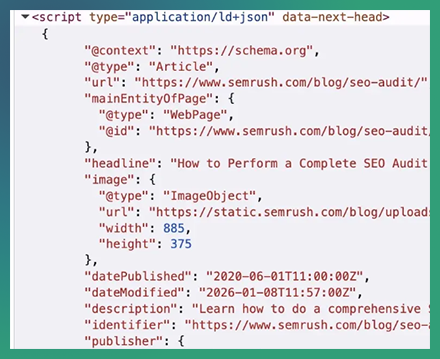
At minimum, implement Local Business schema with your complete business information. Add Person schema for key advisors with their credentials and specialties. Use FAQPage schema for your Q&A content. And consider Review schema for client testimonials (where compliance allows).
This is a bit technical, but the impact is significant. You could either look up how to implement schema or ask your website developer to do this for you.
Websites with proper schema markup are up to three times more likely to be cited by AI platforms because the information is easier for them to parse and understand.
Website Structure That AI Platforms Love
AI platforms prefer websites that are clearly organized and easy to navigate. This means having a logical site structure with descriptive URLs, clear headings that use relevant keywords, internal linking that connects related content, and fast loading speeds that don't frustrate AI crawlers.
But most importantly, make your key information easy to find. Your credentials, location, services, and contact information should be prominently displayed and consistently formatted across your site.
The Competitive Advantage
As we write this article, most financial advisors are completely unaware of the AI lead generation opportunity. This creates a massive first-mover advantage for those who act quickly.
But this window won't stay open forever. As more advisors discover AI optimization, the competition will intensify. The advisors who establish their AI presence now will have a significant advantage over those who wait.
Think about the early days of Google SEO. The advisors who optimized their websites for search in the early 2000s dominated their markets for years. The same opportunity exists with AI platforms today, but the window is smaller because information spreads faster now.
The advisors who master AI lead generation today will dominate their markets for the next decade. The question isn't whether this trend will continue - it's whether you'll be part of it.

The Network Effect of AI Recommendations
Here's something most advisors don't realize: AI recommendations create a network effect. When ChatGPT recommends an advisor, that recommendation often gets shared on social media, discussed in forums, or mentioned in conversations. This amplifies the impact far beyond the original AI interaction.
We've seen advisors gain significant socil media followers, speaking opportunities, and media mentions simply because they were frequently recommended by AI platforms. The AI recommendation becomes a credibility signal that opens other doors.
The Quality Advantage
Perhaps most importantly, AI-generated leads tend to be higher quality than traditional marketing channels. Because prospects have already had detailed conversations with AI about their financial situation and goals, they arrive at your practice more educated and ready to engage.
This means higher conversion rates, larger average client sizes, and more efficient sales processes. Several advisors report that AI-generated prospects require fewer meetings to convert and ask more sophisticated questions during initial consultations.

Your 8-Week Implementation Blueprint
Knowing what to do is only half the battle - execution is what separates the winners from the wishful thinkers. This blueprint provides a week-by-week roadmap for implementing everything we've covered.
Week 1-2: Foundation and Assessment
Start by auditing your current AI visibility. Test 10-15 relevant queries across ChatGPT, Claude, and Google's Gemini. Document whether you appear in any responses and how you're described. This baseline will help you measure progress.
Next, optimize your directory listings. Complete your Google Business Profile and Bing Places listings with comprehensive information. Claim profiles on industry directories like NAPFA or Fee-Only Network. Ensure all information is consistent across platforms.
Finally, implement basic schema markup on your website. If you're not technical, hire a developer for this step - it's worth the investment.
Week 3-4: Content Creation Phase 1
Create your comprehensive FAQ section. Start with 25-30 questions that cover the basics of financial planning, then add 10-15 questions specific to your local market. Write each answer in conversational language as if you're talking to a friend.
Focus on questions your ideal clients actually ask: "How much should I save for retirement?" "When should I hire a financial advisor?" "What's the difference between a fiduciary and a broker?" "How do I choose between a fee-only and commission-based advisor?"
Week 5-6: Content Creation Phase 2
Develop your local authority content. Create comprehensive guides that address financial planning challenges specific to your area. Include local tax considerations, regional economic factors, and area-specific opportunities.
Also create educational content that demonstrates your expertise. Choose 3-5 topics you're passionate about and create in-depth guides that provide genuine value to your prospects.
Week 7-8: Monitoring and Optimization
Set up your monitoring system. Whether you choose a paid tool like SEMrush or a DIY approach, establish a regular schedule for testing your AI visibility. Monthly testing is sufficient for most advisors.
Also set up analytics tracking to measure the business impact of your efforts. Add AI platforms to your "How did you hear about us?" forms and create custom segments in Google Analytics to track AI referrals.
Ongoing: Continuous Improvement
AI optimization isn't a one-time project - it's an ongoing process. Plan to update your content quarterly, test new queries monthly, and adjust your strategy based on what's working.
Most importantly, track the business results. If you're not seeing increased leads and clients from AI recommendations within 90 days, revisit your strategy and adjust.
Community Exclusive Resources: VIDEOS
- How to Automate Financial Planning Like a Pro
- Track Opportunities & Convert Prospects Without Building a Sales Pipeline
- How to manage insurance policies in a CRM